
Siding and Weather‑Resistive Details

What You’ll Learn

* Choose a siding path that matches your plan (panel vs. lap)
* Use the first sheet as your reference to keep everything square
*Flash and seal the places water tries to get in
*Trim door and window openings cleanly

Time: Half day to one day, depending on size and crew.

Tools: Circular saw or track saw, drill/driver, nailer, utility knife, chalk line, level, j‑roller (for tapes), snips, PPE.

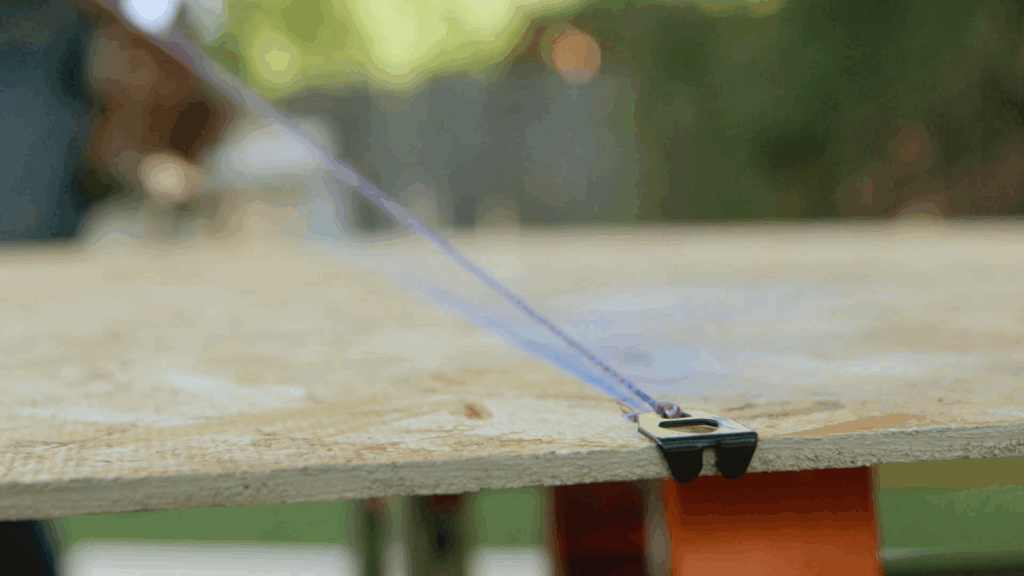
chalk line easyshedplans.com

Path A — Panel Siding (Fast and Straight)

Typical materials: Engineered wood or fiber‑cement panels.

1. Snap a starter line
Hold the bottom edge per plan above grade. Snap a chalk line around the shed.

2. Set the first sheet
Start at a back corner. Plumb the sheet carefully; this becomes your reference.

3. Gaps and edges
Leave ~1/8 in between panels and at trim edges unless the
manufacturer says otherwise.

4. Nailing pattern
Follow the plan/manufacturer: commonly edges 6 in O.C., field 12 in O.C. Don’t over‑drive fasteners.

5. Work around corners
Stagger panel seams and keep factory edges at visible corners when possible.

Path B — Lap Siding (Cladding Over Sheathing)

Typical materials: Fiber‑cement or engineered wood lap boards over wall sheathing and WRB.

1. Install WRB
Wrap the building with a weather‑resistive barrier, shingle‑lapping seams.

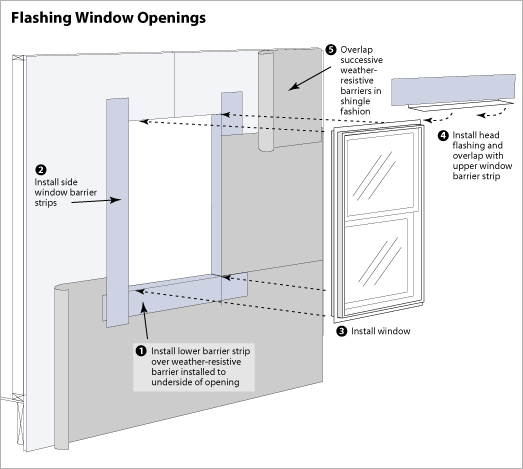
2. Flash rough openings
Self‑adhesive flashing tape at sills, then jambs, then head (in that order).

3. Starter strip and first course
Level a starter at the base. Set the first course dead level.

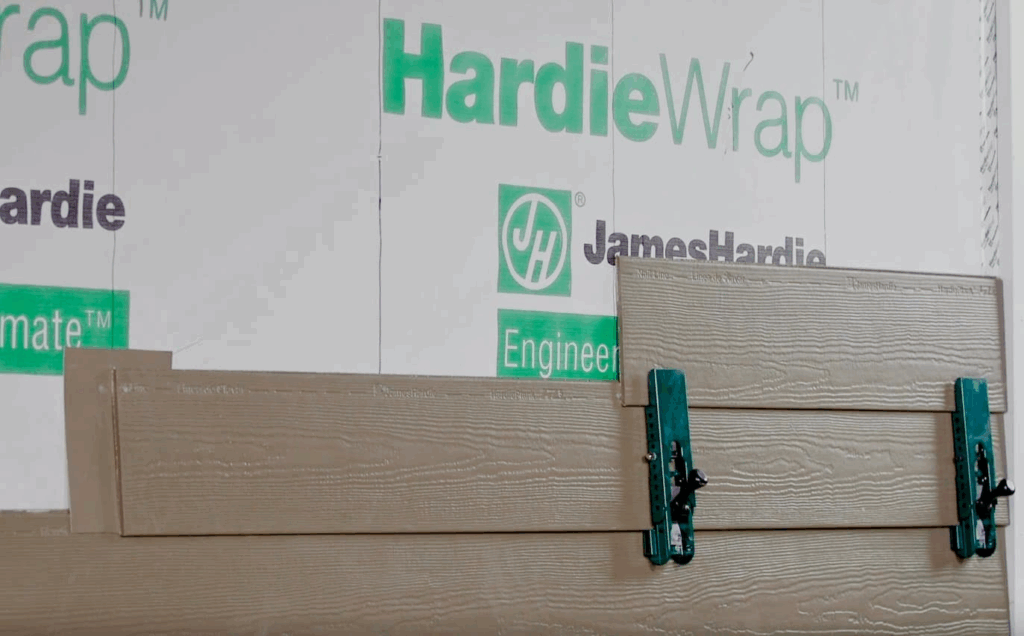
4. Maintain reveals
Use gauges or a story pole so courses stay consistent.

5. Blind‑nail per spec
Follow manufacturer’s fastener and spacing guidance.

Lap Siding (Cladding Over Sheathing)
flashing window openings easyshedplans.com

Weather‑Resistive Details (Where Leaks Start)


Base/foundation joint: Drip edge or Z‑flashing where panel meets trim; maintain clearance to grade.

Corners: Use pre‑made corners or site‑built with primed trim; keep gaps consistent.

Windows: Sill pan or back‑dam, jamb tapes, head flashing that tucks under WRB head flap.

Doors: Head flashing over door trim; maintain threshold clearance; seal side casing to siding.

Penetrations: Flash lights/vents with compatible boots or tapes; keep the ‘shingle’ principle.

Trim Door and Window Openings

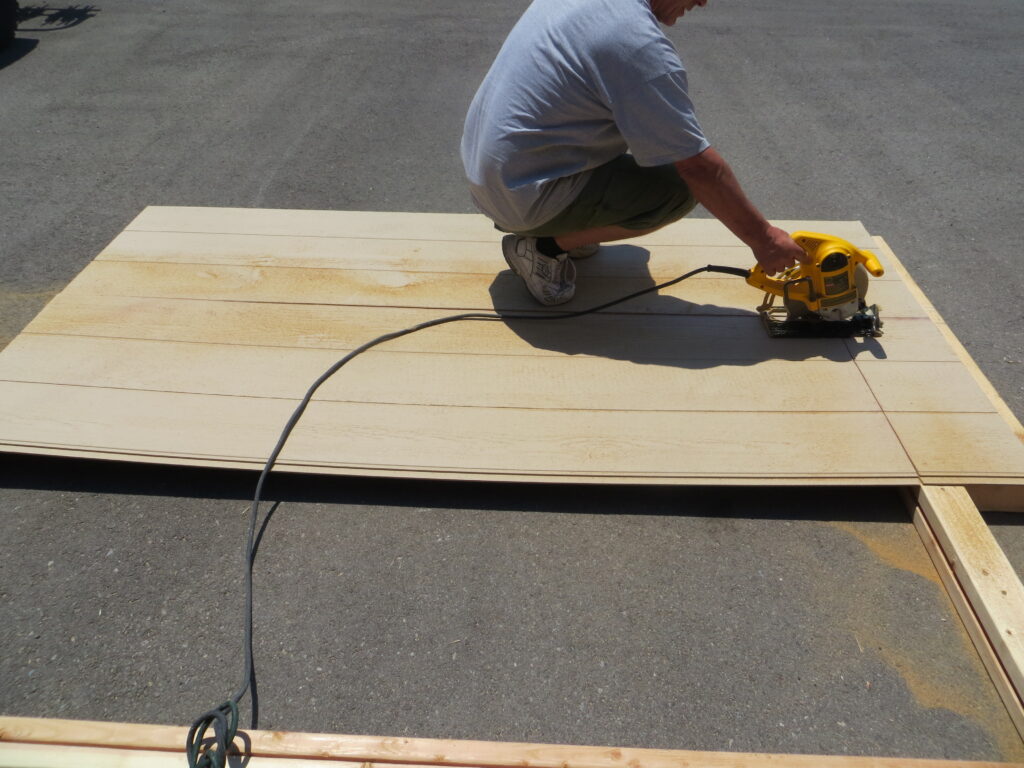
Trim Door and Window Openings

1. Rout or saw cut
Cut openings from the exterior after panels are fastened.

2. Clean edges
Sand or ease sharp cuts on engineered panels; prime raw edges if required.

3. Prep for units
Confirm rough openings are square and plumb; add shims or adjust framing now.

Keep it Straight (Sight Lines)

Sight along panel grooves or lap courses from the corner; correct drift early.

Use a long level or string line to align faces and catch bows.

At the front wall, ensure the reveals align with the door trim height.

Keep it Straight (Sight Lines)

Materials (Siding Stage)

Panel siding or lap boards per plan/manufacturer

WRB, flashing tapes, metal flashings (drip/Z/head)

Exterior‑rated nails/screws per schedule

Trim boards, caulk compatible with your materials

Your plan set includes over 25 pages of detailed drawings and instructions, plus a material list and tool list to match quantities and fasteners.

Troubleshooting

Wavy panels: Check studs for alignment; add shims or plane high spots.

Lap courses ‘walk’: Re‑establish level with a story pole; snap a new reference line.

Leaks at openings: Revisit the sill‑jamb‑head tape order; make sure head flashing tucks under WRB.

Explore

EASY Step‑by‑Step Build

Follow the sequence or jump to the step you need.

Scroll to Top