
Planning, Codes, and Site Prep

What You’ll Learn

* How to decode common rules without legal jargon
* How to sketch a quick site plan and mark setbacks
* How to pick a spot with good drainage and access
* How to stake, square, and level the footprint (10×12 shown)

Time: 1–2 sessions, depending on the layout complexity and soil type.

Tools: Tape, string, stakes, line level or laser, 2‑ and 4‑ft levels, shovel, rake, hand tamper or plate compactor, spray paint/flags, safety gear.

prep for shed easyshedplans.com

Local Rules in Plain English

Every city has its own unique terms, but these ideas are prevalent everywhere.
* Setbacks: Minimum distance from property lines, easements, or sidewalks.
* Height limits: Overall height or wall height caps; sometimes measured to the midpoint of the roof.
* Size thresholds: Many areas have simplified rules near 120 sq ft; verify locally.
* Foundation/anchoring: Skids, piers, or slab; wind and frost requirements vary.
* Utilities: Call 811 (or local locate) before digging for piers or trenches.

Pro tip: Print your plan’s cover sheet and circle the size, wall height, and roof type when talking to your permit desk.

Quick Site Plan (Sketch It First)

* A simple sketch helps you confirm setbacks and choose a spot.

* Draw your lot outline and house footprint.

* Add property lines and measured setbacks.

* Draw a 10×12 rectangle (or your size) for the shed.
Mark doors, gates, trees, and slopes.

Pick the Best Spot

* Drainage: Choose higher ground; avoid depressions. Water should flow away from the shed on all sides.

* Access: Leave room for carrying 12–16 ft boards and for delivering gravel.

* Sun and shade: Doors that see morning sun dry faster; consider snow shedding and roof orientation.

* Trees and roots: Keep clear of large roots and falling branches.

Stake, Square, and Level the Footprint

A true rectangle and level base make framing faster and doors happier.

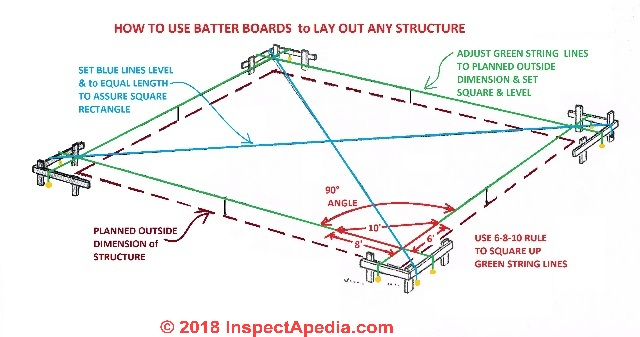
1) Layout with batter boards
Set batter boards beyond the corners so strings can move while you tweak.
Pull tight strings to define the footprint edges.

2) Square with the 3‑4‑5 method
Mark 3 ft along one edge, 4 ft along the adjacent edge; adjust until the diagonal between marks is 5 ft.
Scale up for bigger accuracy (e.g., 6‑8‑10).

3) Confirm diagonals
Measure both corner‑to‑corner diagonals; adjust until they match.

4) Set elevation
Use a line level or laser to choose a reference height at the highest corner.
Plan for a slight crown toward the center and drainage to the edges.

batter boards
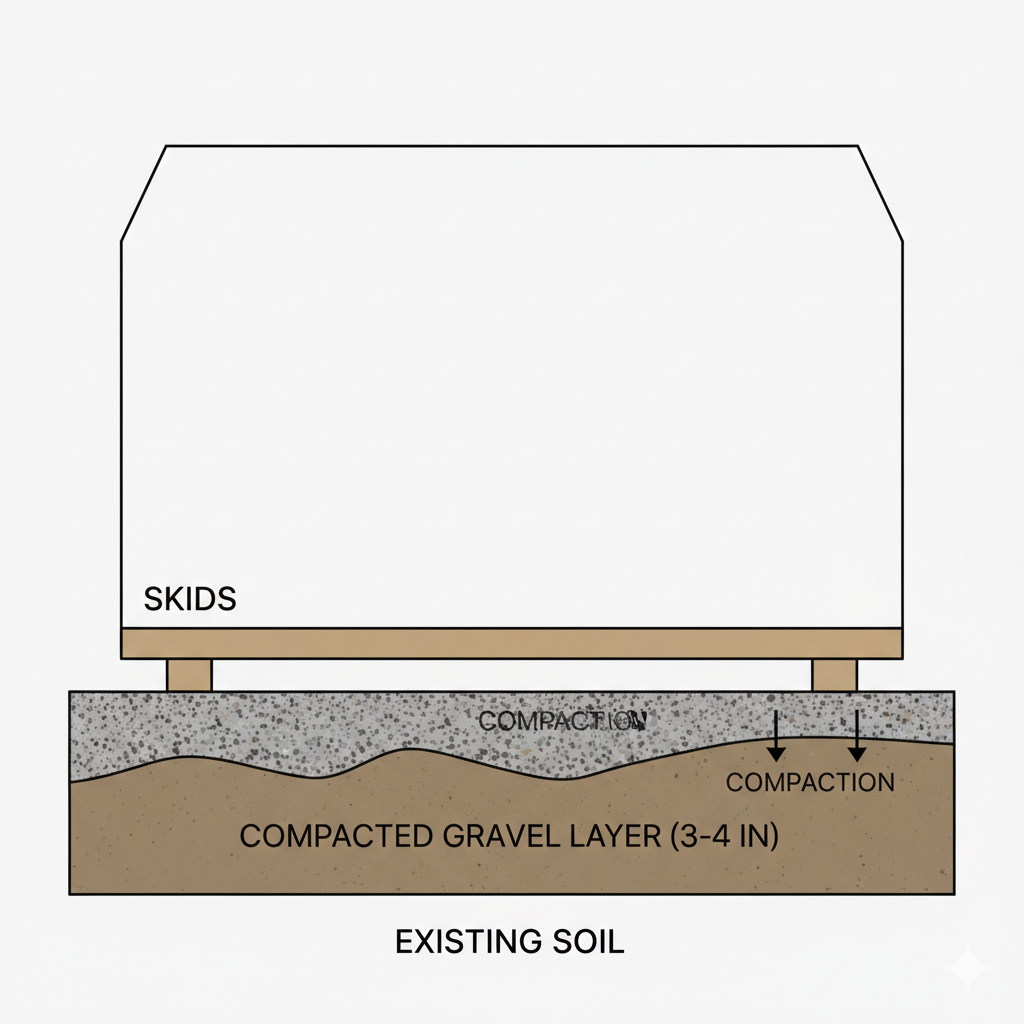
section view easyshedplans.com

Grade, Gravel, and Compaction
(for Skid Foundations)

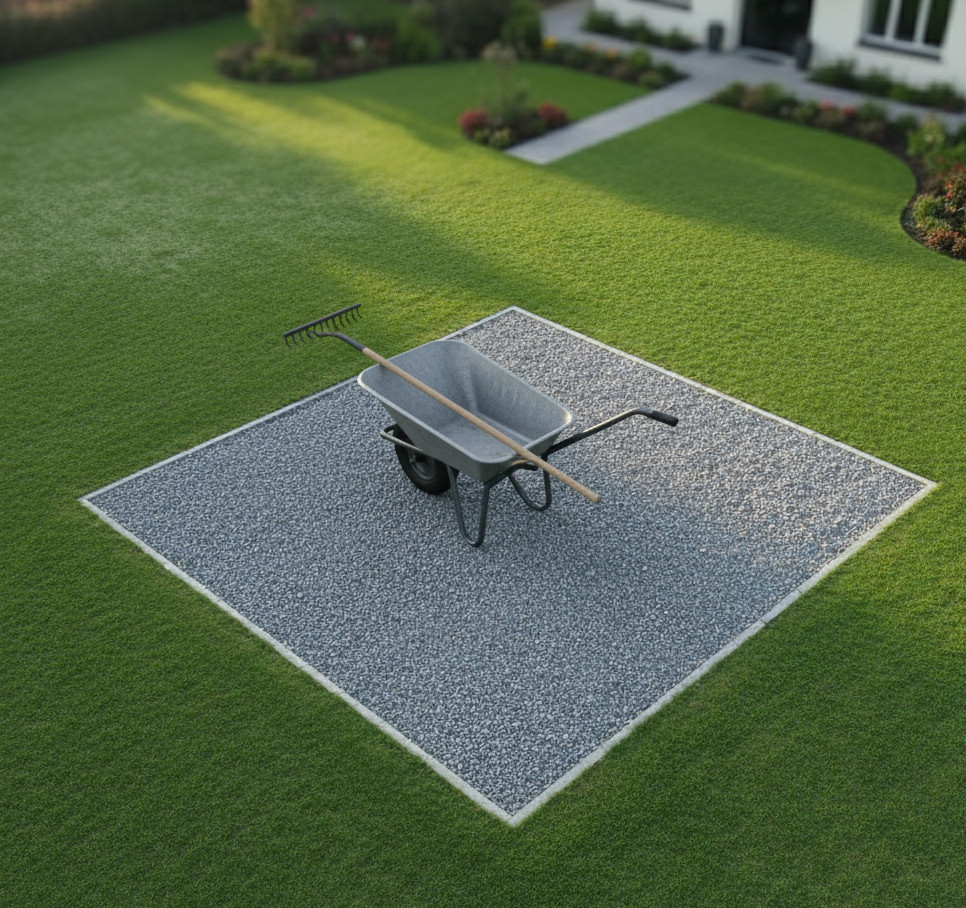
If you’re using skids on gravel, build a flat, well‑compacted pad.

1. Strip sod a few inches beyond the footprint.
2. Rake level and check slope; remove high spots rather than filling low ones when possible.
3. Add 3–4 in of compactible gravel (e.g., 3/4 in minus). Spread evenly.
4. Compact in lifts using a plate compactor or hand tamper.
5. Re‑check level across diagonals and both directions.

Pier or Slab Alternatives (Overview)

Piers: Dig to code depth below frost, set tubes, level tops, and embed anchors as required.

Slab: Prepare sub‑base, moisture barrier, reinforcement as specified, and anchor bolts while wet.

811 logo

Safety and Utility Locate

Wear eye and ear protection; gloves for digging and tamping.
Keep kids and pets away from open holes.
Call 811 before digging; mark gas, power, water, and telecom.

Materials for Site Prep

Layout. Stakes, batter boards, string, spray paint

Leveling. Shovel, rake, line level or laser, 2‑/4‑ft levels

Base. 3/4 in minus gravel, landscape fabric (optional)

Compaction. Hand tamper or plate compactor

Safety. Glasses, hearing protection, gloves

safety easyshedplans.com
art shed easyshedplans.com

Quick Checks Before You Move On

* Setbacks confirmed and sketch saved

* Utilities marked or clearance confirmed

* Footprint strings square (diagonals equal)

* Elevation set and pad level within 1/4 in across

* Gravel compacted or piers/slab plan chosen

Scroll to Top