
Rafters, Trusses, and Fascia

What You’ll Learn

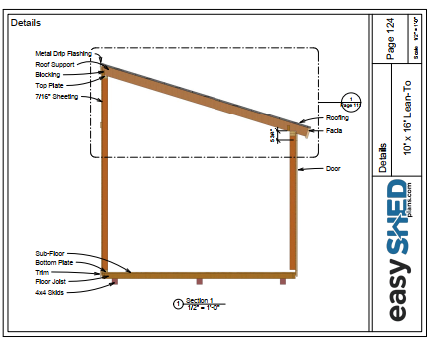
* Lay out and cut rafters with accurate birdsmouth seats
* Assemble and set trusses square and in plane
* Add lookouts, sub‑fascia, and fascia for straight eaves and rakes*
Use rafter ties/collar ties and connectors to resist thrust and wind

Time: Half day to one day, depending on style and crew.

Tools: Circular saw, speed square, framing square, bevel gauge, drill/driver, nailer/hammer, clamps, chalk line, 2‑ and 4‑ft levels, temporary bracing, PPE.

10×16 lean to shed (pdf plan)

Path A — Cut Rafters (Gable/Lean‑To/Office/Studio)

Mark the pitch
Use a speed square/bevel gauge to mark the plumb cut at the ridge based on your chosen pitch (e.g., 4/12, 6/12, 8/12).

Lay out the birdsmouth
Measure the wall thickness and mark a seat cut that bears fully on the top plate while maintaining minimum member depth per plan.

Test a pattern rafter
Cut one rafter and test‑fit at the wall and ridge. Adjust the birdsmouth or tail length as needed.

Gang‑cut the set
Trace the pattern onto the remaining blanks; cut carefully and keep orientation consistent.

Set ridge and first pair
For gable roofs, install a ridge board at the correct height and set the first pair of rafters plumb at each end; brace temporarily.

Fill the field
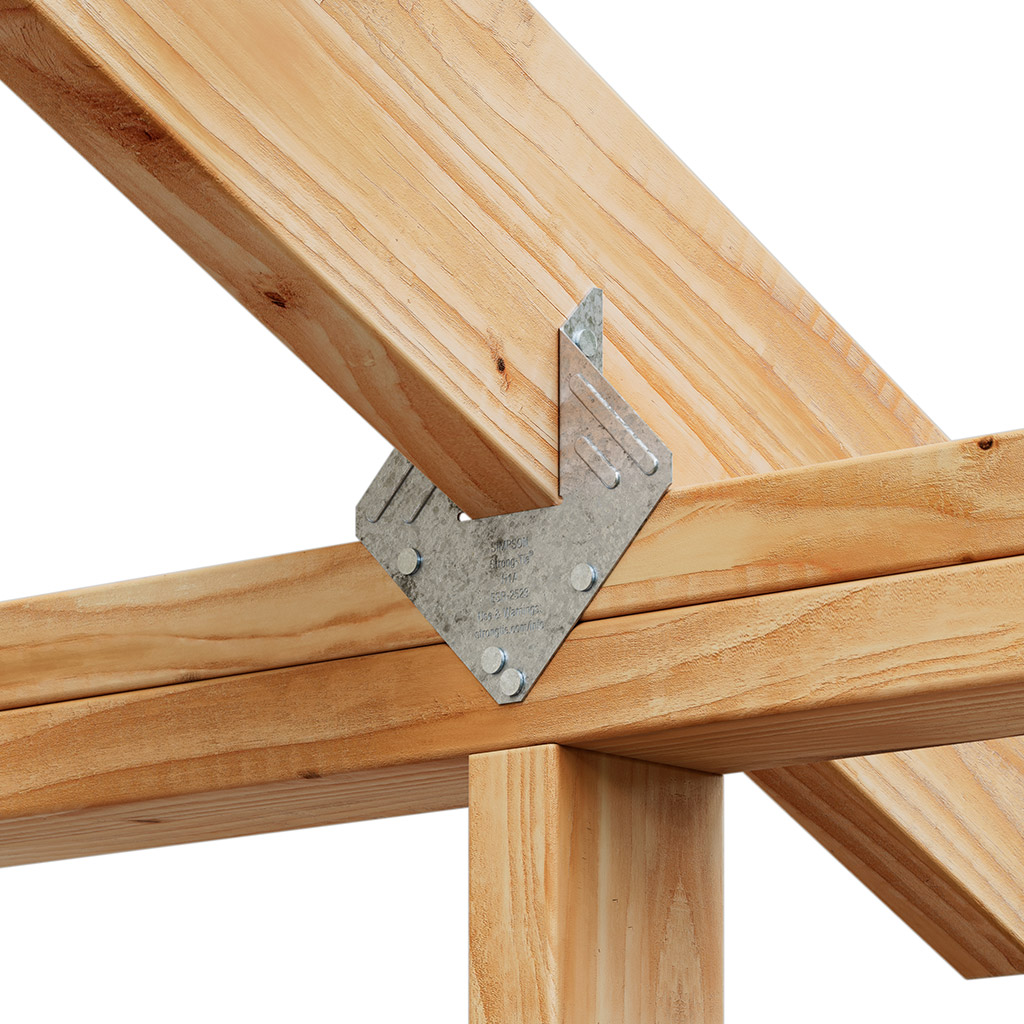
Install intermediate rafters at plan spacing (often 16 or 24 in O.C.). Add hurricane ties or approved connectors at plates.

Path B — Trusses (Gable or Gambrel)

Templates first
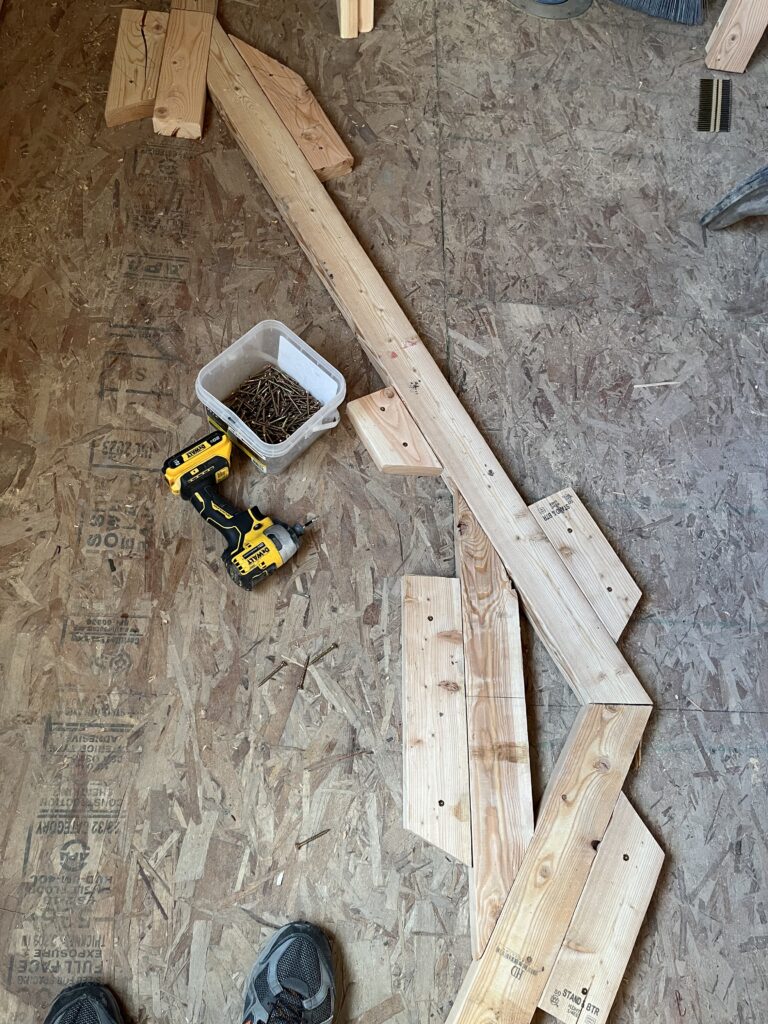
Print and verify truss templates from your plan (check scale). Lay them on a flat surface as guides.

Assemble chords and webs
Cut members to length; place over the template; fasten with gussets per plan. Keep joints tight and faces flush.

Check square and duplicates
Verify the first truss is square and flat; use it as the master to make exact duplicates.

Set end trusses, then field
Stand the first two trusses at the ends, plumb and brace. Fill in the field at the plan spacing (commonly 24 in O.C.).

Permanent bracing
Install top‑chord and web bracing as specified to keep trusses in plane.

trusses easyshedplans.com
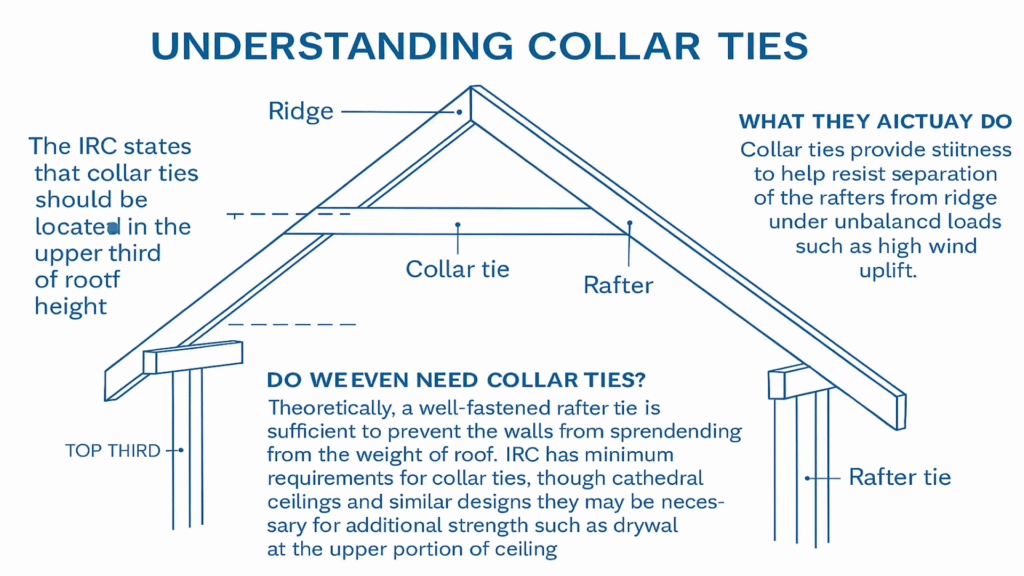
collar ties roof easyshedplans.com

Rafter Ties vs. Collar Ties (Know the Difference)

Rafter ties: Low in the span, tie opposing rafters to resist outward thrust at the walls. Use per plan when there is no structural ridge.

Collar ties: High in the upper third, tie opposing rafters near the ridge to resist uplift. Do not substitute for rafter ties.

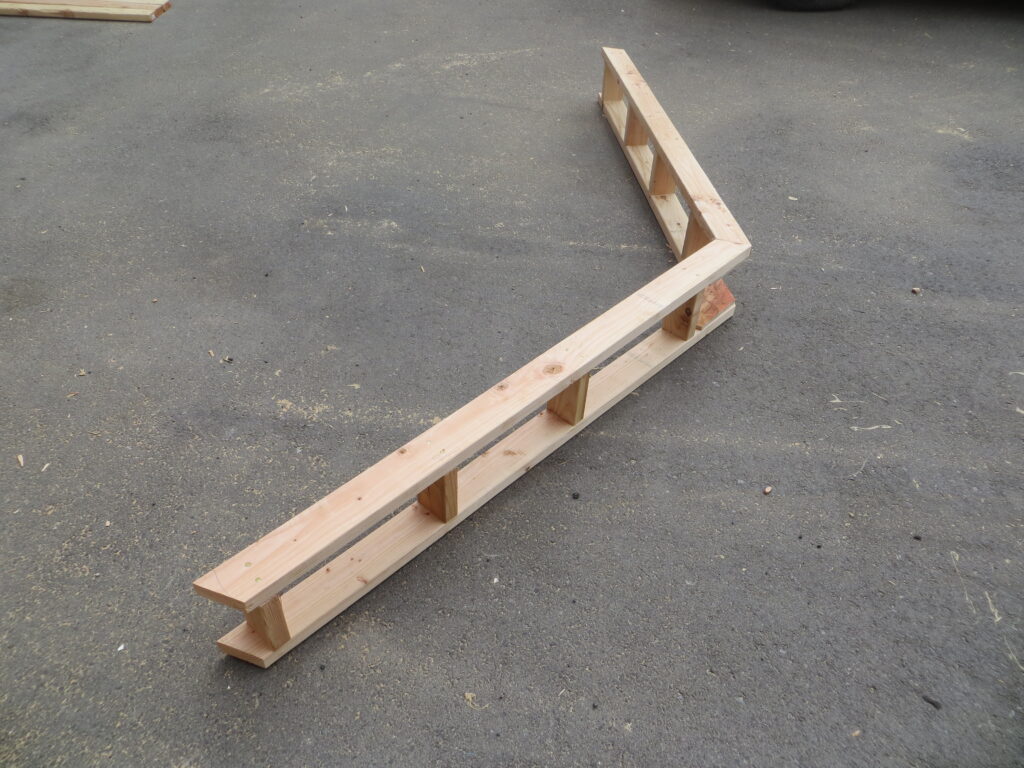
Lookout - easyshedplans.com

Lookouts, Rakes, and Sub‑Fascia

Sub‑fascia first
Run straight sub‑fascia along rafter tails, sight from corner to corner; plane or shim minor variations.

Lookouts (for gable rakes)
Install lookouts to support barge rafters on gable ends. Keep the rake overhang consistent (e.g., 3–8 in).

Finish fascia
Install finished fascia or wraps. Leave clean lines for the drip edge to sit flush.

Keep Everything Straight (String and Brace)

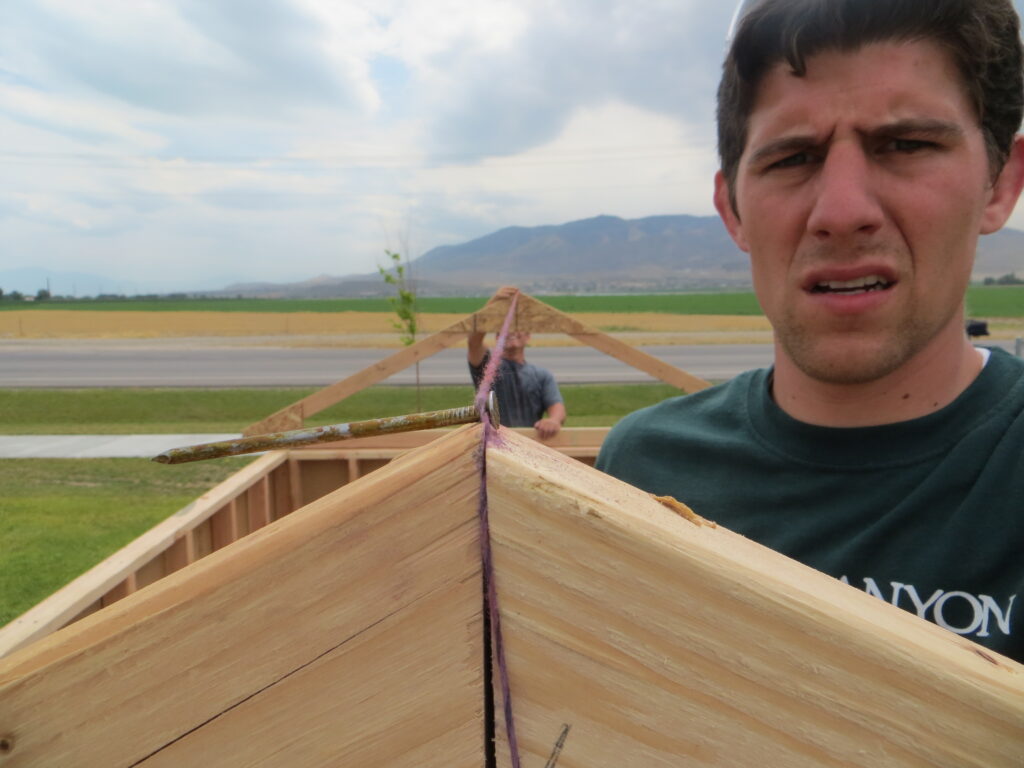
Snap a chalk line along rafter tails to align fascia.

Use temporary lateral bracing across rafters/trusses to keep spacing even.

Sight along the ridge or truss peaks; add braces to correct any waves before sheathing.

Use string line - easyshedplans.com
hurricane ties header

Connectors and Fasteners

Hurricane ties or straps at each rafter/plate connection where specified.

Structural screws/bolts where plans call for them (e.g., ledger or ridge supports).

Nailing patterns for gussets and blocking per plan.

Materials (Doors & Windows Stage)

Rafters or truss members: Per plan and pitch

Gussets and bracing: Plywood or metal plates as specified

Sub‑fascia and fascia: Straight stock ready to finish

Connectors: Hurricane ties, straps, structural screws/bolts


Your plan set includes over 25 pages of detailed drawings and instructions plus a material list and tool list to match sizes and hardware.

Troubleshooting

Rafters don’t seat flat: Re‑check birdsmouth depth and top‑plate height; adjust the cut lightly rather than forcing.

Wave at fascia line: Snap a new line and plane high tails; re‑set sub‑fascia to the line.

Trusses out of plane: Add temporary lateral bracing; confirm all heels are bearing equally before sheathing.

Explore

EASY Step‑by‑Step Build

Follow the sequence or jump to the step you need.

Scroll to Top