
Wall Framing

What You’ll Learn

* Lay out plates for studs, doors, and windows
* Build straight wall sections on the deck
* Stand, plumb, brace, and tie walls together

Time: 1 day for most sheds with two people.

Tools: Tape, pencil, speed square, chalk line, circular saw, drill/driver, framing nailer or hammer, 2‑ and 4‑ft levels, framing square, temporary bracing, PPE.

layout easyshedplans.com

Plate Layout (Mark It Once, Build It Fast)

1. Cut plates
Bottom and top plates to length per wall; label front, back, and sides.

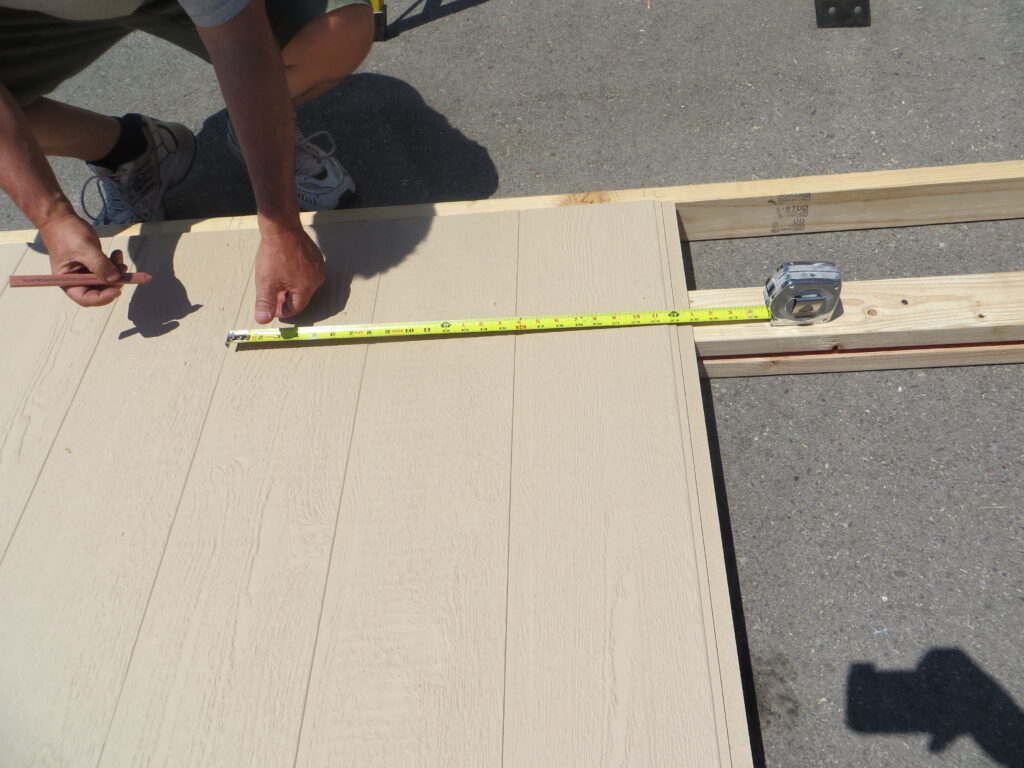
2. Mark on‑center spacing
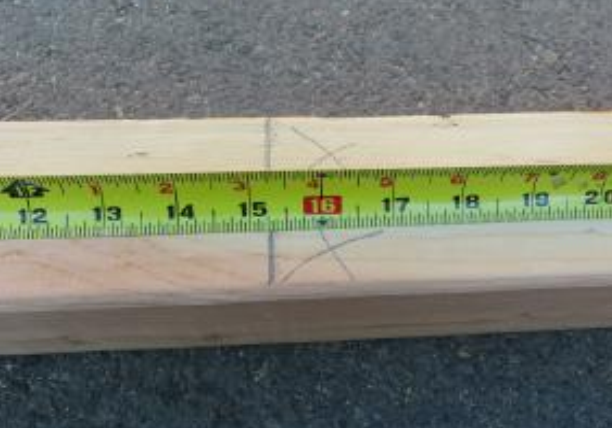
Typical 16 in O.C. (verify your plan). Carry marks across both plates. Put an ‘X’ on the stud side of each mark.

3. Mark openings
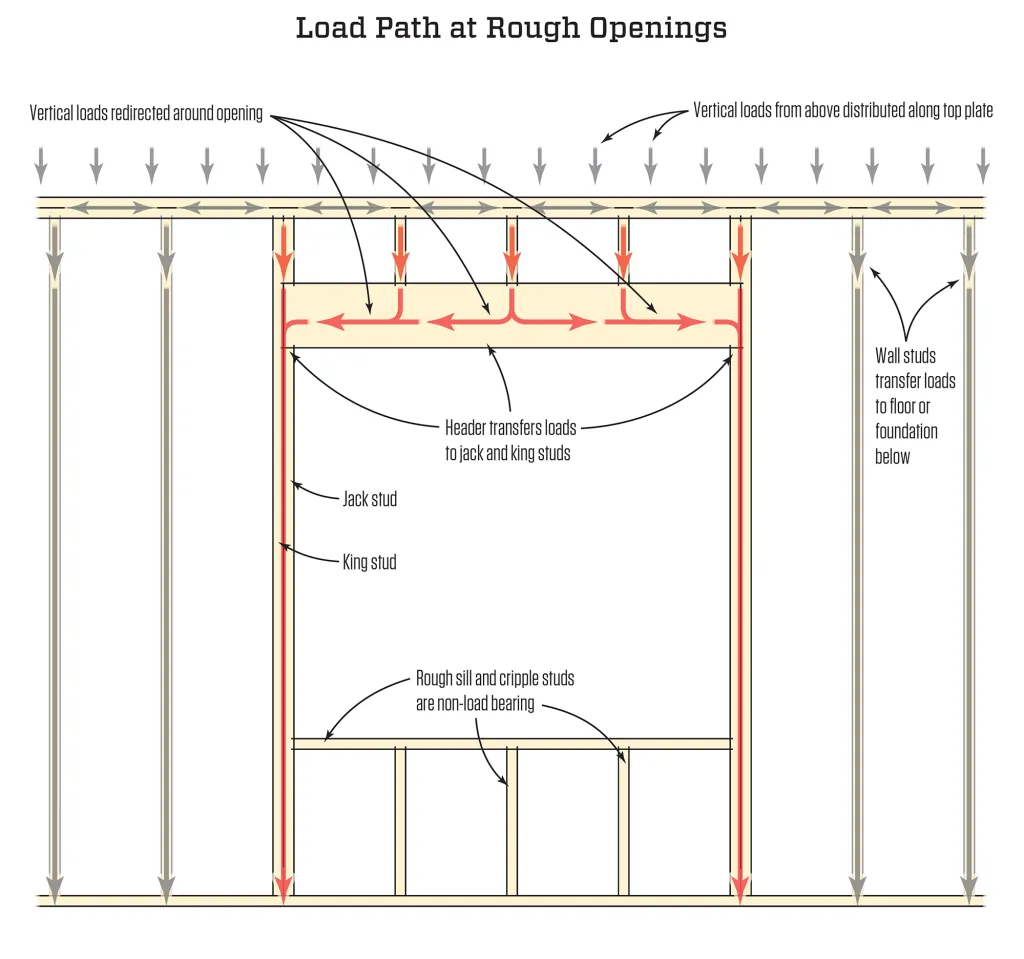
Transfer rough opening (RO) widths for doors and windows from your plan. Mark king studs, trimmers, header height, sill height.

4. Add corners and intersections
Use three‑stud corners or ladder blocks for tying interior wall returns and giving nailing for sheathing.

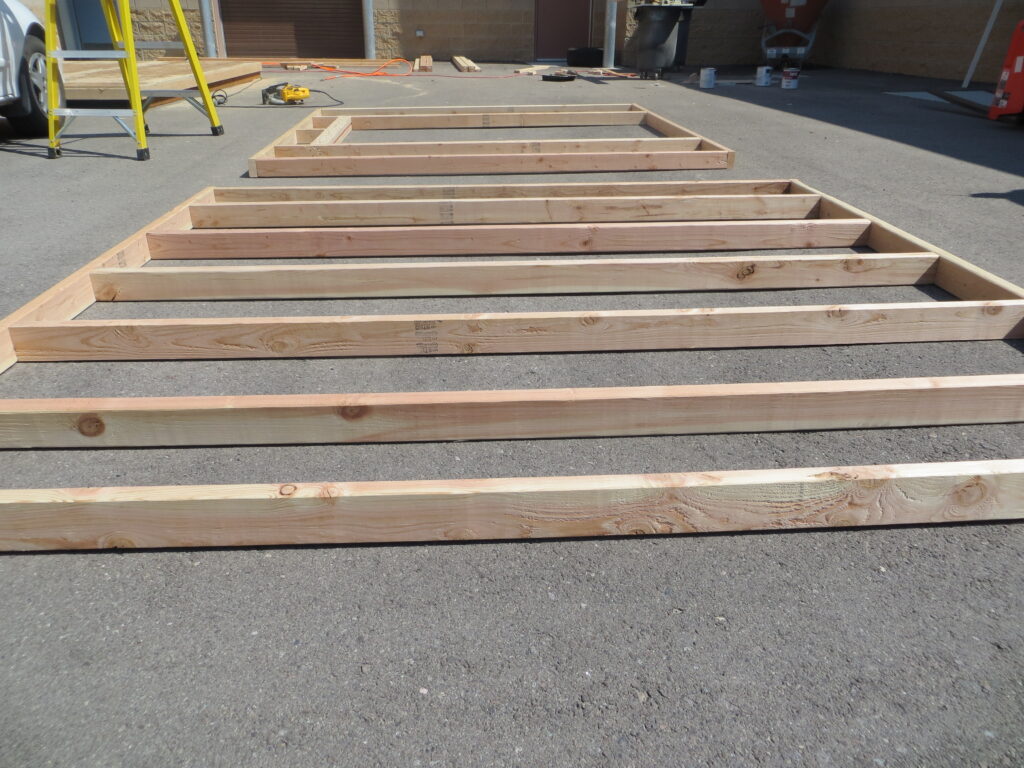
Build the Walls Flat

1. Cut studs and headers
Cut studs to match wall height (e.g., 6‑ft or ~8‑ft versions per your plan). Build headers from specified lumber with spacers if required.

2. Assemble frames
Nail studs to plates at layout marks. Install king and trimmer studs at openings. Keep crowns facing the same way.

3. Headers and sills
Set headers over openings at the marked height; add jack/trimmer studs tight under headers. For windows, install sills and cripples.

4. Check square
Measure diagonals of the wall section and adjust before nailing off.

layout easyshedplans.com
brace Wall easyshedplans.com

Stand, Plumb, and Brace


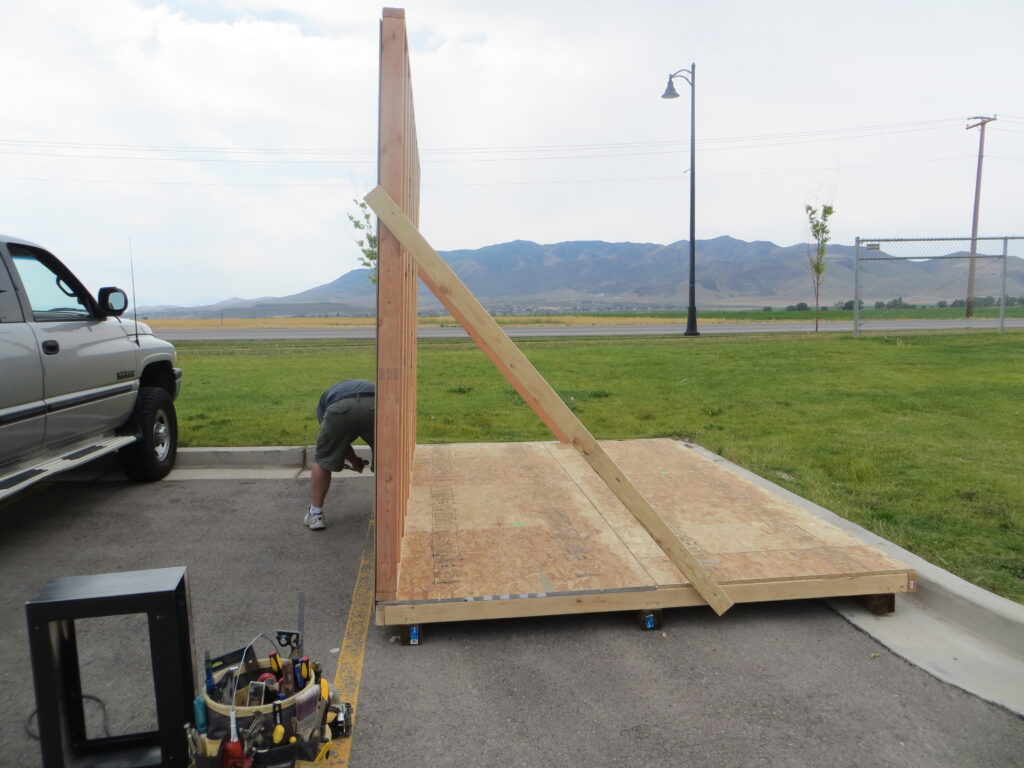
1. Stand the first wall
Start with a long side wall. Lift, align to floor edge, and tack the bottom plate.

2. Plumb
Use a 4‑ft level to plumb each stud bay, then brace to the floor with temporary 2×4s.

3. Second wall and corners
Stand the adjacent wall. Align corner studs; nail corners together.

4. Tie with top plates
After all walls are up, install double top plates, overlapping corners, and staggering joints.

5. Anchor and straighten
Anchor bottom plates per your foundation type. Sight down the wall and adthe just braces until the top is straight.

window rough opening

Door and Window Rough Openings (RO)

Verify RO sizes against the door/window you’ll install; manufacturers list exact ROs.

Shims and square: Keep openings plumb and square now to save time later.

Cripples and nailing: Add cripples above and below openings as your plan specifies so sheathing and trim have nailing.

Sheathing Timing (Two Common Paths)

Path A: Sheath before standing (panelized): Faster and safer on the deck; heavier lifts; verify square carefully.

Path B: Stand first, then sheath: Lighter lifts; easier tweaks to plumb; sheath from ladders/scaffold.

sheeting
sheeting

Blocking, Nailing, and Straightening

Install continuous blocking at horizontal panel seams if your sheathing layout needs it.

Keep nailing patterns consistent with the plan (edges vs. field).

Sight the top plate and add temporary braces to remove any bows before the roof goes on.

Safety

Keep feet clear when lifting walls; use proper lifting technique.

Brace as you go; never leave walls unbraced in wind.

Eye and ear protection during nailing and cutting.

Troubleshooting

Wall won’t plumb: Check for a crowned bottom plate or uneven floor; shim the bottom plate as needed.

Corners don’t meet flush: Verify stud layout at edges and that plates are cut to true length.

Opening is tight: Confirm RO dimension; shave trimmer or adjust shims before sheathing.

Materials (Wall Stage)

Studs and plates per plan (common: 2×4/2×6)

Header stock and spacers per plan

Sheathing panels if installing now

Temporary bracing 2×4s, nails/screws per schedule

Your plan set includes over 25 pages of detailed drawings and instructions, plus a material list and tool list for exact sizes and counts.

Explore

EASY Step‑by‑Step Build

Follow the sequence or jump to the step you need.

Scroll to Top