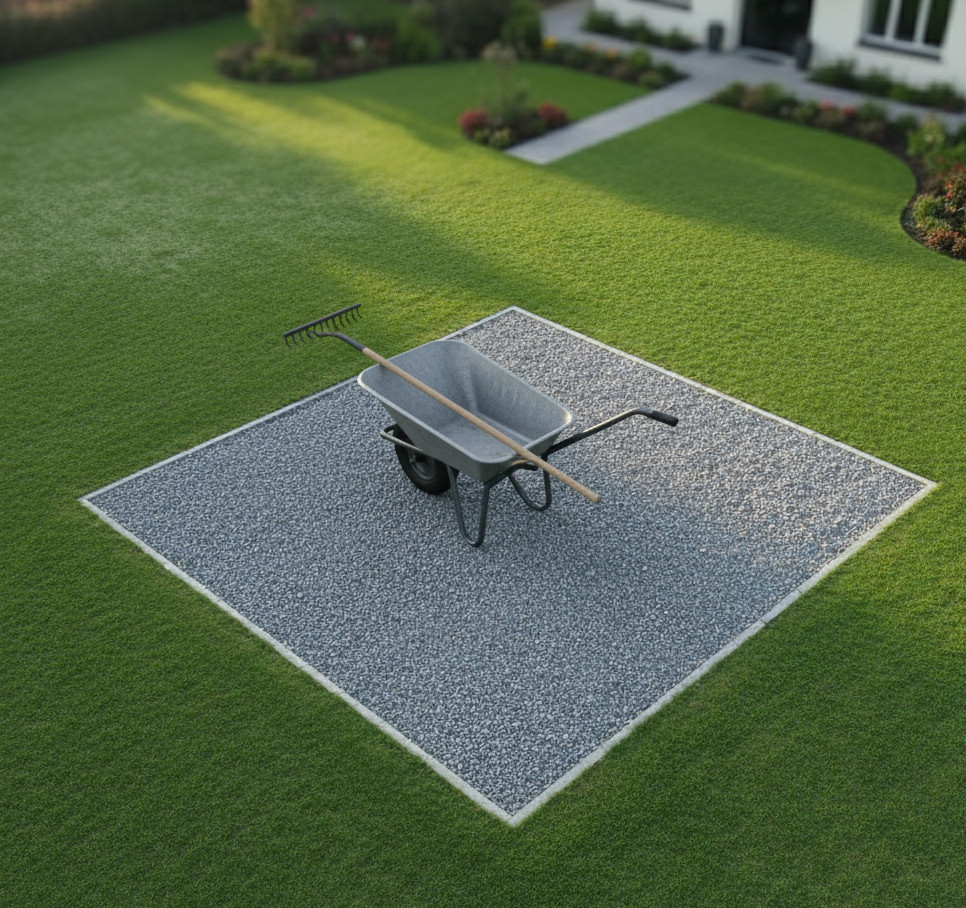

Foundations That Work

Foundation Options (Pick What Fits Your Site)
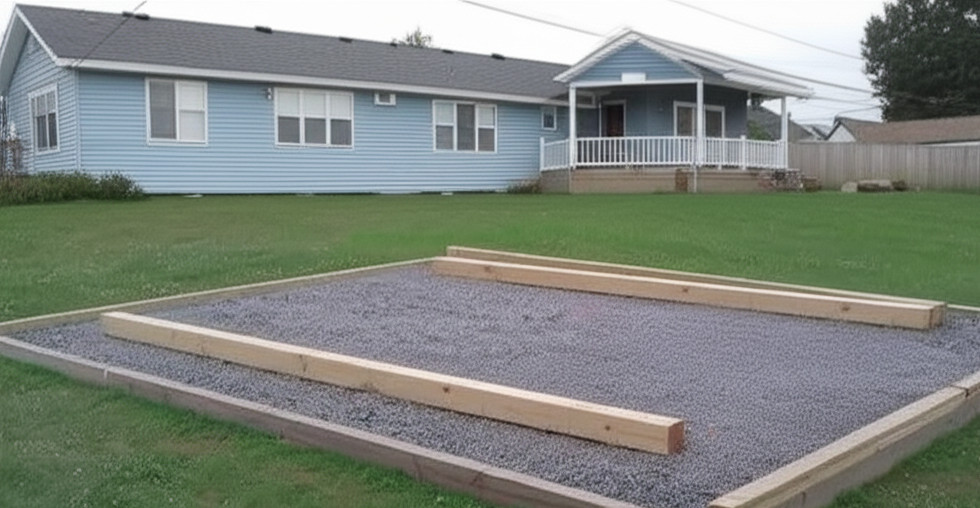
skids easyshedplans.com

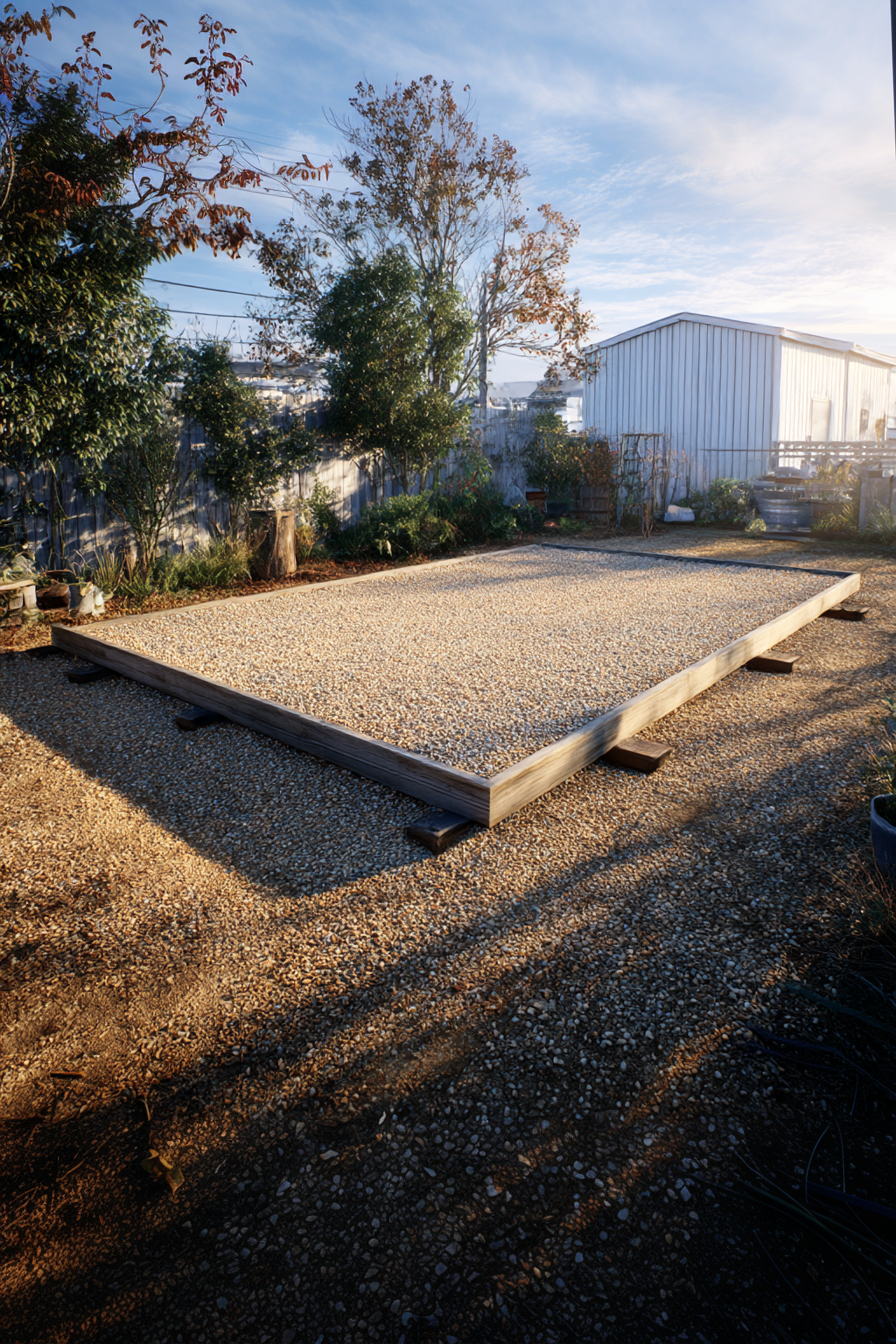
Skids on Compacted Gravel (most DIY‑friendly)

Best for: Level to mildly sloped yards, good drainage, fast builds

What it is: A compacted gravel pad with pressure‑treated skids supporting the floor

Why people choose it: Quick, affordable, movable, no concrete curing

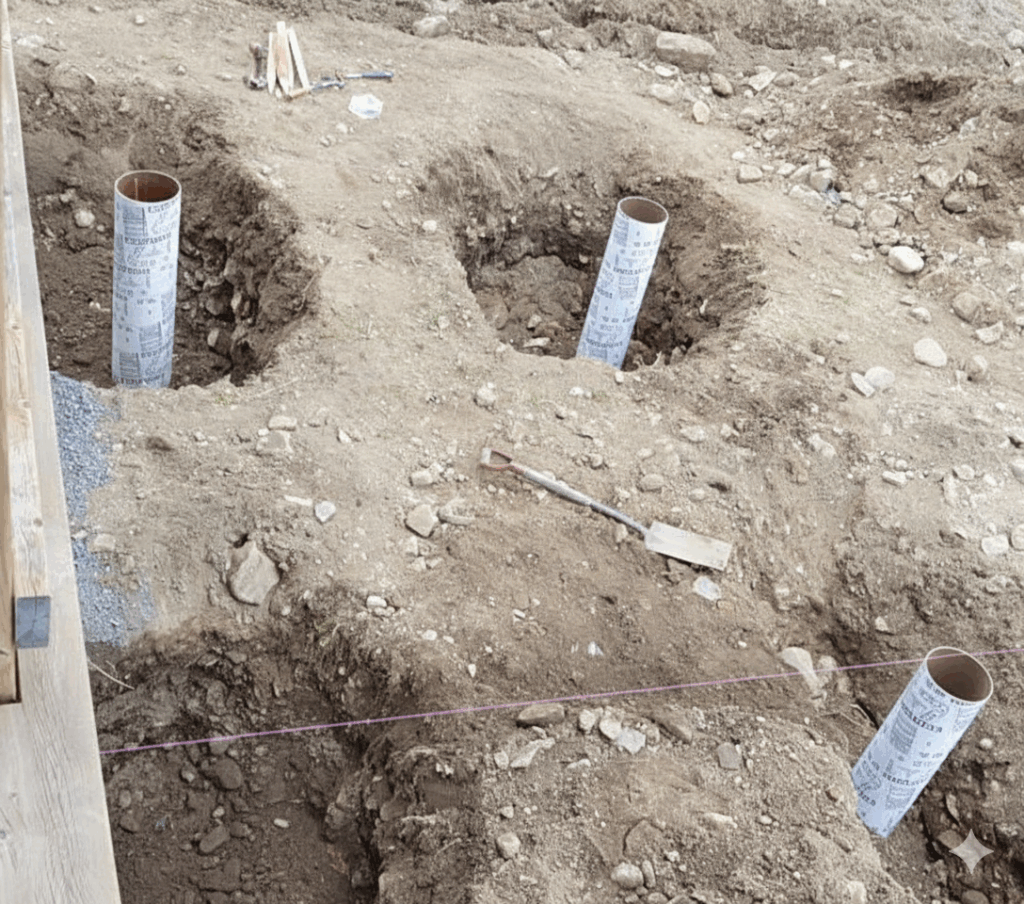
Concrete Piers (great on slopes or frost‑heavy regions)

Best for: Sloped sites, clay soils, deeper frost lines

What it is: Concrete footings/tubes at set points with adjustable anchors or post bases

Why people choose it: Positive bearing at known points, height adjustability

concrete piers
slab on grade

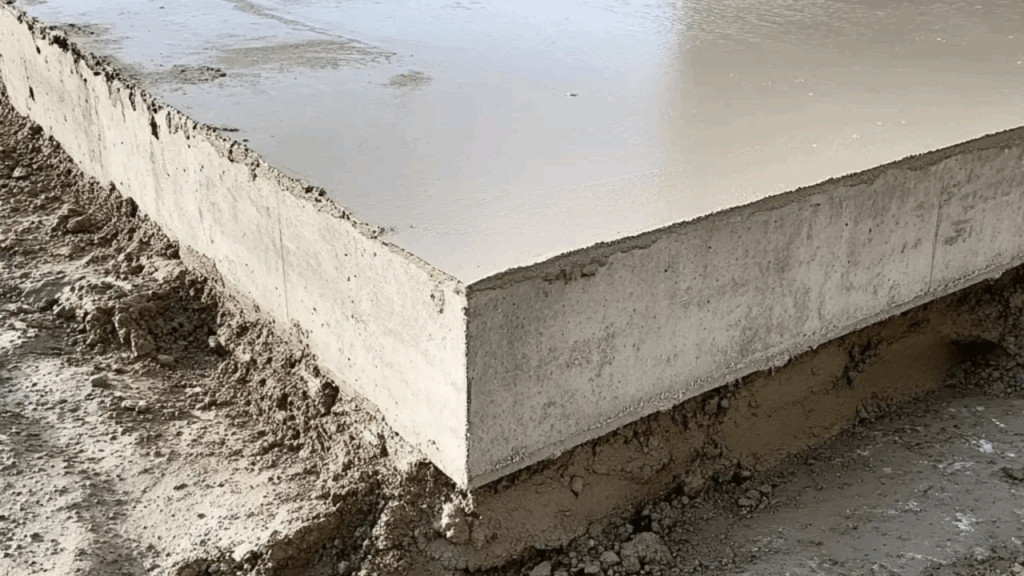
Slab on Grade (clean and permanent)

Best for: Flat sites, mower/ATV storage, sweeping, and hose‑down convenience

What it is: A reinforced concrete pad with anchor bolts

Why people choose it: Integrated floor, ultra‑rigid base, easy to roll in equipment

How to Choose (Quick Guide)

Drainage: If water lingers after rain, prefer piers or raise the gravel pad higher.

Slope: More than ~6 in drop across the shed width often points to piers.

Use case: Heavy rolling loads (rider mower, ATV) favor a slab.
Budget & speed: Skids on gravel are typically the fastest and most cost‑effective.

Build the Gravel Pad (Skid Foundation)

A reliable baseline method shown for a 10×12; scale to your size.

1. Prepare the area
Strip sod 12–18 in beyond the footprint; remove roots/organic matter.
Rake relatively flat; shoot elevations with a line level or laser.

2. Set forms (optional but helpful)
Use 2×4 or 2×6 screed rails temporarily to guide the level.

3. Add and compact gravel
Use 3/4‑in minus (well‑graded). Place in 2 in lifts; compact each lift.
Aim for 3–4 in compacted thickness minimum; add more to raise above the surrounding grade.

4. Level and crown
Pull a slight crown toward the middle (≈1/2 in) so water runs to edges.
Confirm level side‑to‑side and corner‑to‑corner.

5. Place skids
Typical: two or three pressure‑treated 4×4 or 4×6 skids running the long direction.

6. Space skids equally under joists per your plan. Shim only with treated, solid material if required.
Re‑check square
Measure both diagonals; adjust skids until equal.

gravel pads easyshedplans.com
piers layout

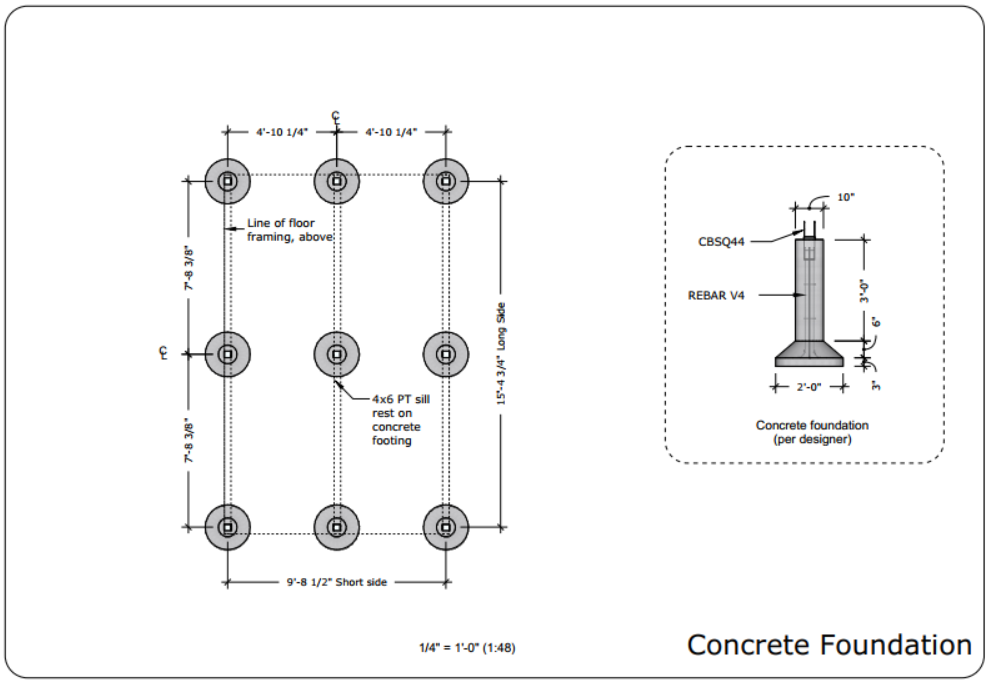
Concrete Pier Layout (Overview)

1. Plan the grid
Mark pier locations per span requirements. Common starting grids:
8×10: 2 rows × 3 piers (≈ 6 total)
10×12: 2 rows × 4 piers (≈ 8 total)
12×16: 3 rows × 4 piers (≈ 12 total) Adjust to your plan’s joist span and skid/beam size.

2. Set strings and mark centers
Use batter boards beyond corners; square lines; mark pier centers with paint.

3. Dig to frost depth
Bell or enlarge bases where required; keep holes plumb.

4. Pour and set tubes
Use footing at base if required, then set form tubes. Finish tops to a leveled string line.

4. Install anchors or post bases
Set embedded anchors while green or drill/epoxy later as specified.

Level, Square, and Drainage Checks

Level: Within 1/4 in across the footprint.

Square: Diagonals match; walls and floor will go faster.
Drainage: Surrounding grade slopes away; no low pockets near edges.

Checklist card prompt: “A small ‘Foundation Checks’ card with three checkboxes: Level, Square, Drainage. Simple icons, white background.”

Materials & Tools (Foundation Stage)


Base. 3/4‑in minus gravel, landscape fabric (optional)
Lumber. PT 4×4 or 4×6 skids, stakes, temporary forms
Concrete. Form tubes, mix or ready‑mix order, anchors/post bases
Tools. Plate compactor or hand tamper, shovel, rake, level/laser, string line, saw
Safety. Glasses, hearing protection, gloves, boots

prep for shed easyshedplans.com

Troubleshooting

Pad looks level, but doors stick later: Re‑check square; shim skids to remove twist before floor sheathing.

Water puddles at edges: Add gravel to raise the pad; feather the surrounding grade away.

Piers not in plane: Snap a reference line on blocks/tubes and grind or shim with approved materials.

Scroll to Top